Venue: Lycabettus Theater, Athens
Date: May 15, 2026
Review and photography: Dimitris Fatisis
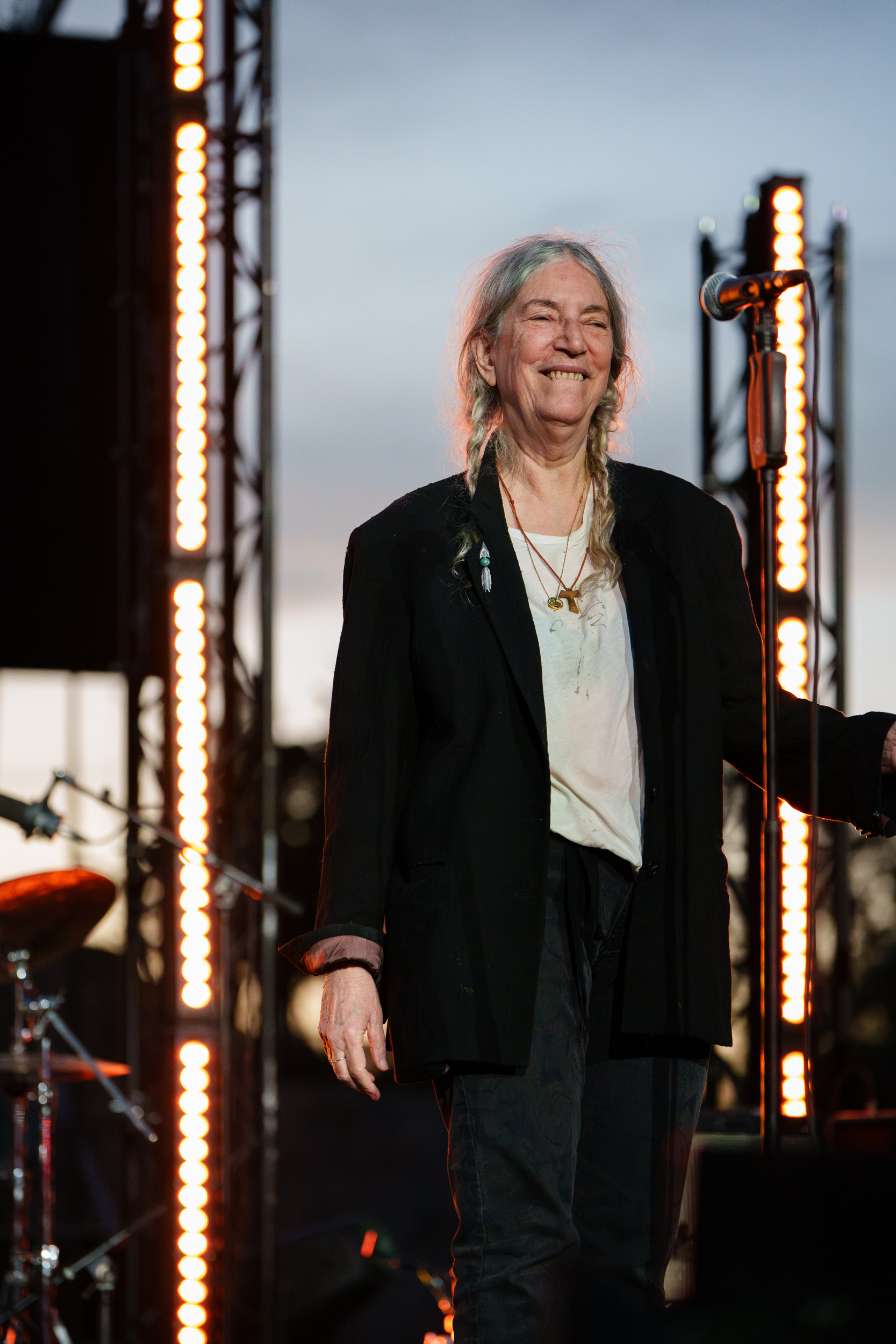
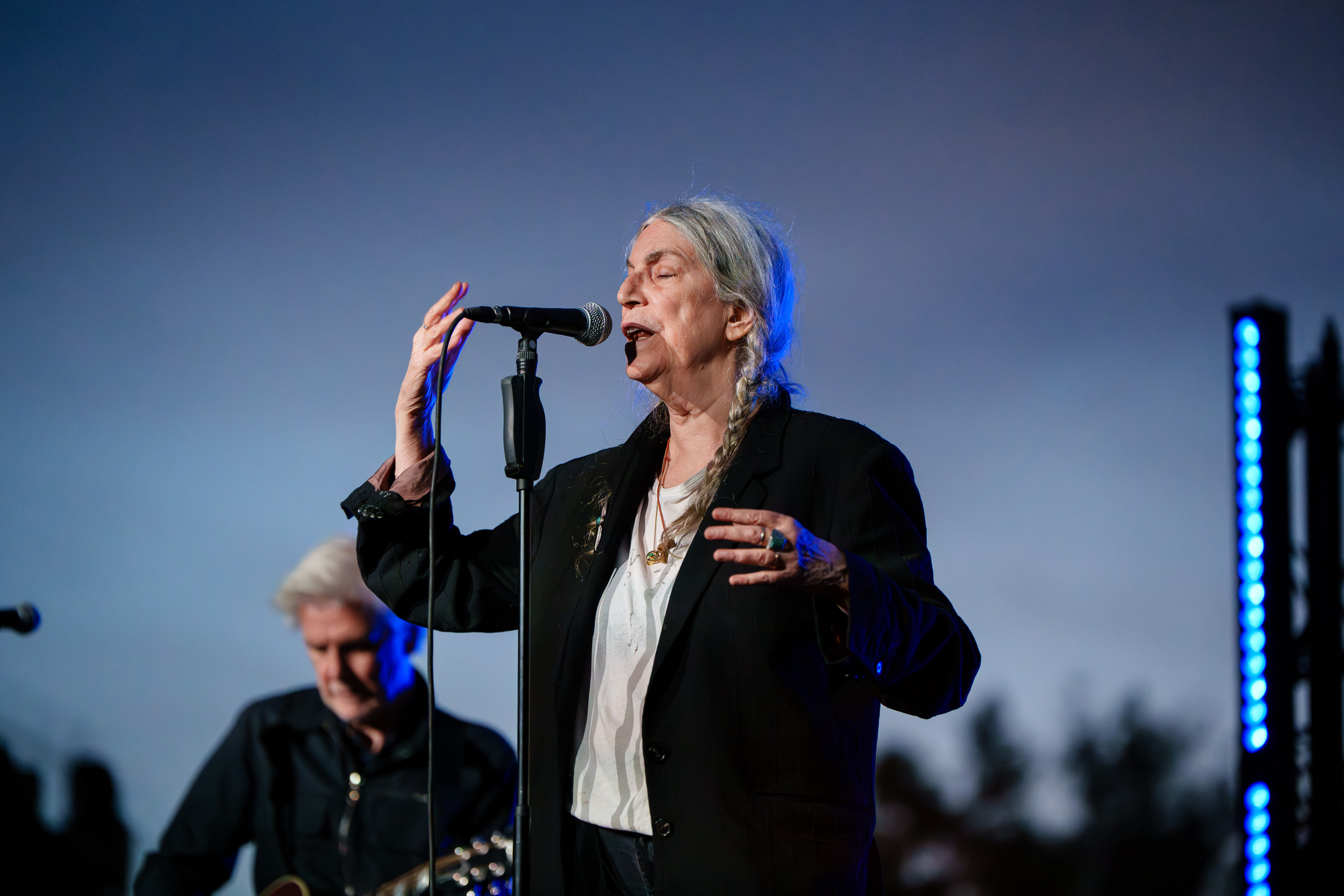
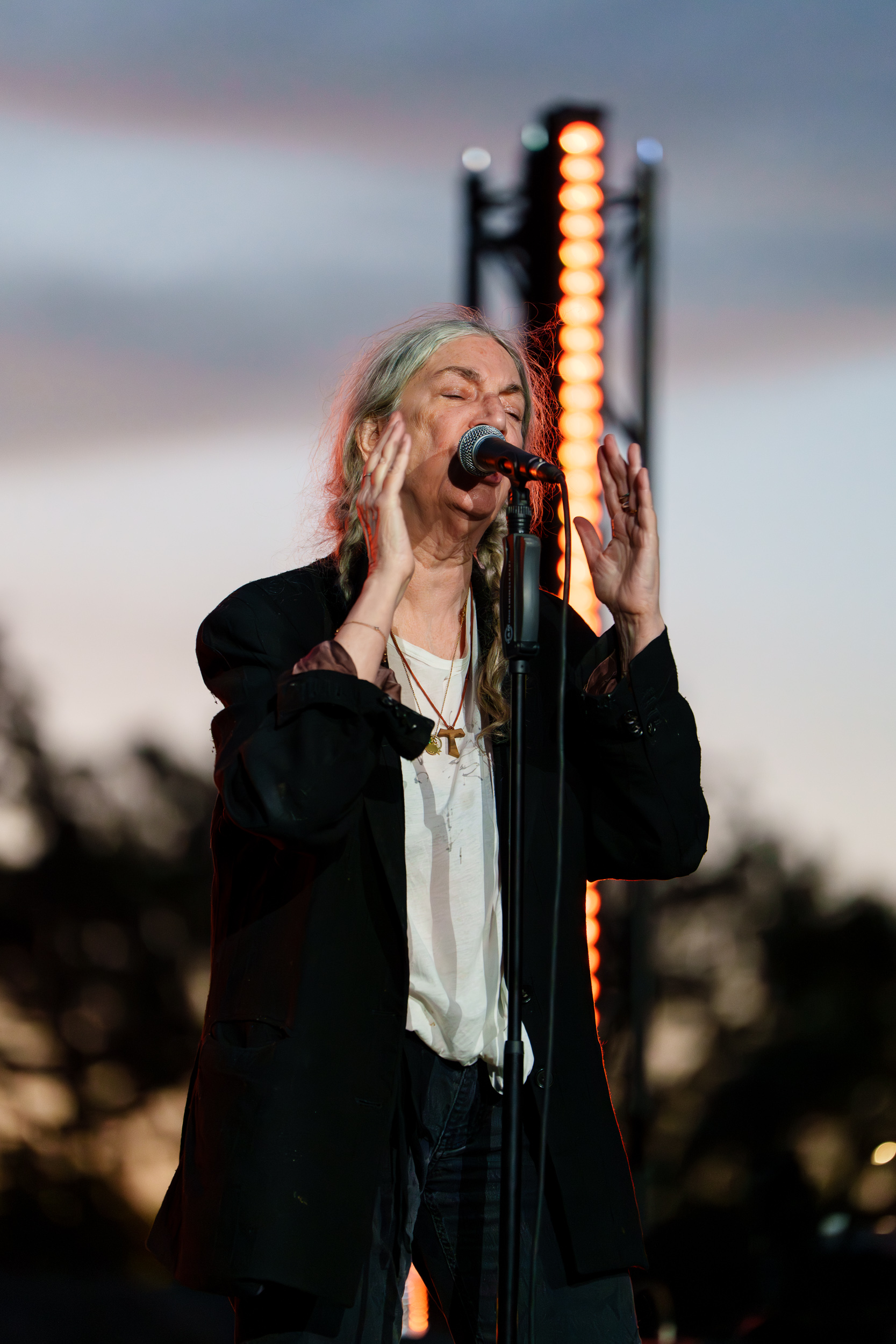
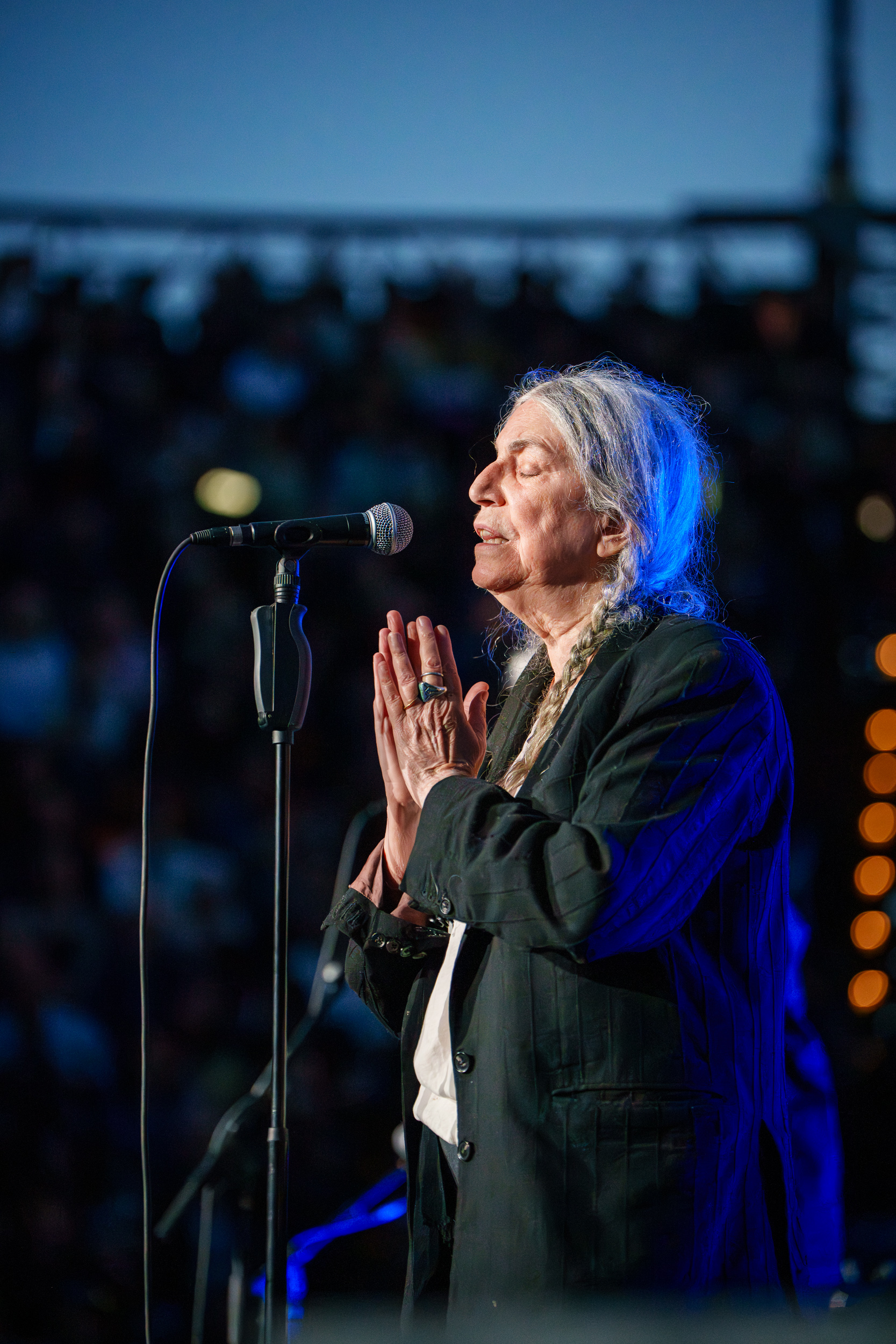
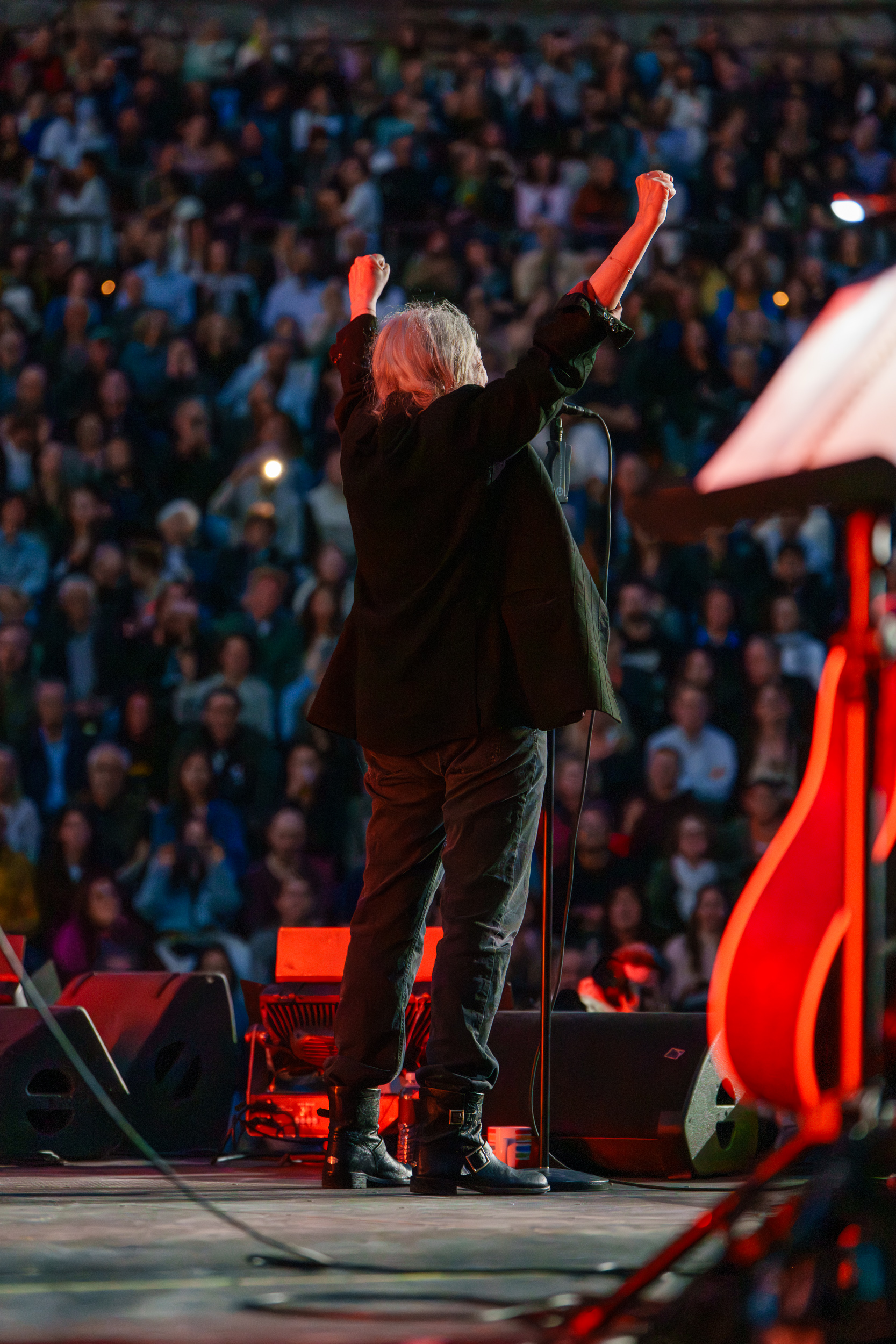
Patti Smith returned to Athens on May 15, 2026, bringing the Patti Smith Quartet to a sold-out Lycabettus Theater for an evening that brought together rock, poetry, memory and a strong sense of connection between artist and audience.
The setting could hardly have been more fitting. As the sun began to disappear behind Athens and the colors over the city changed, people continued to fill the open-air theater, forming an audience that crossed generations. Longtime followers stood alongside younger listeners discovering Smith’s music decades after the release of the records that established her as one of rock’s most distinctive voices.
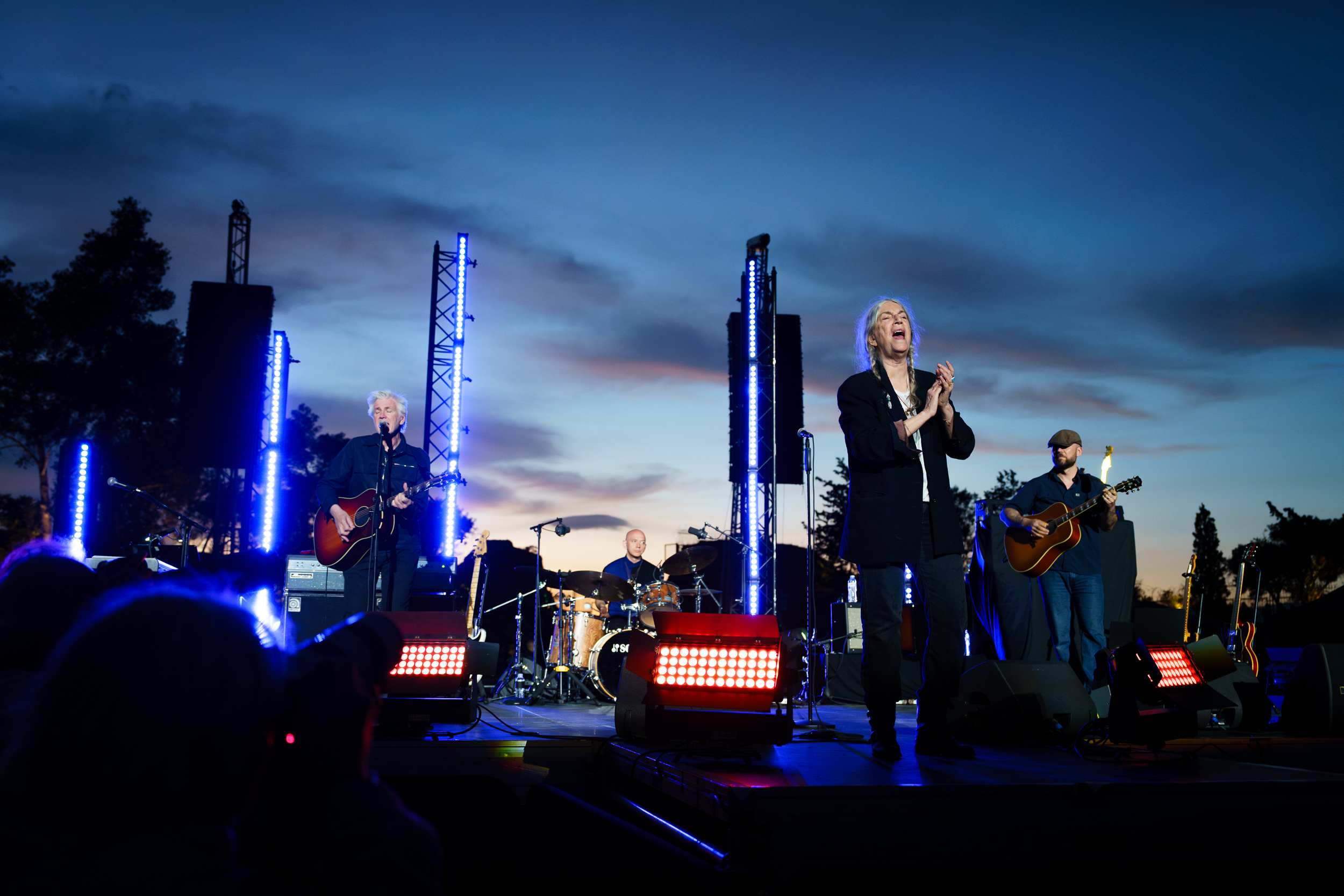
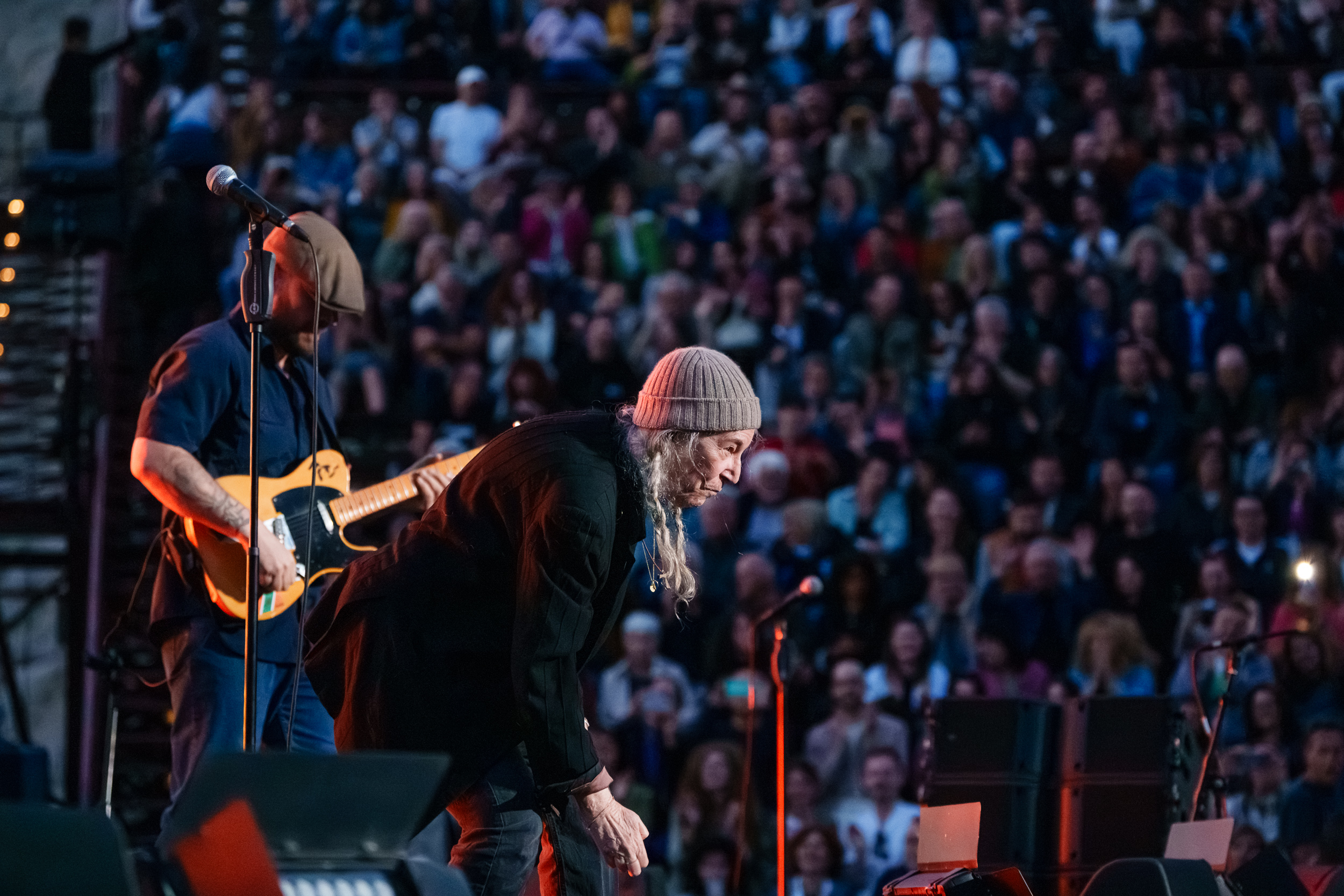
There was no need for a dramatic entrance or elaborate production. The anticipation was already there before the first note was played, and when Smith and the quartet appeared on stage the reaction made clear just how strong her relationship with the Greek audience remains.
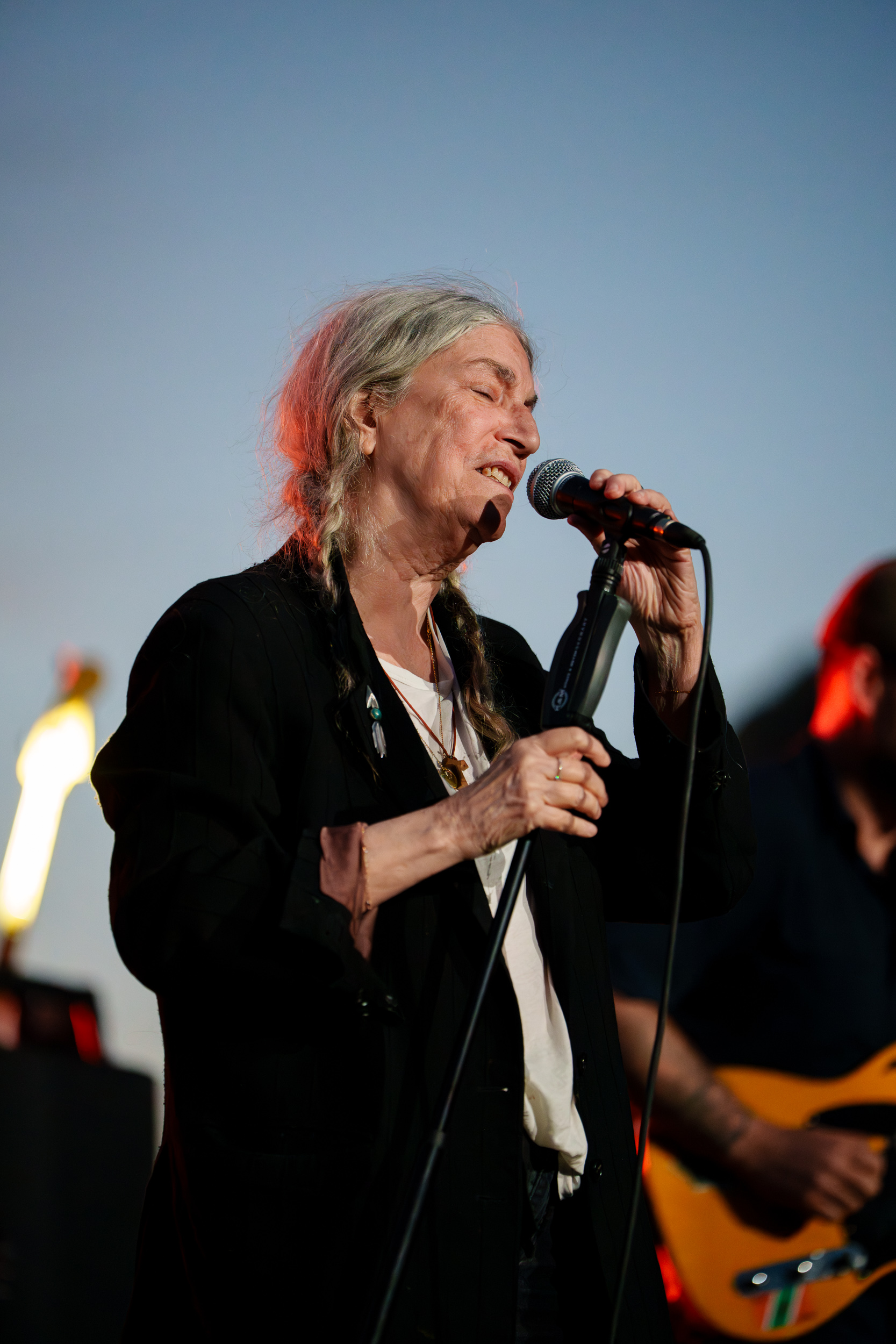
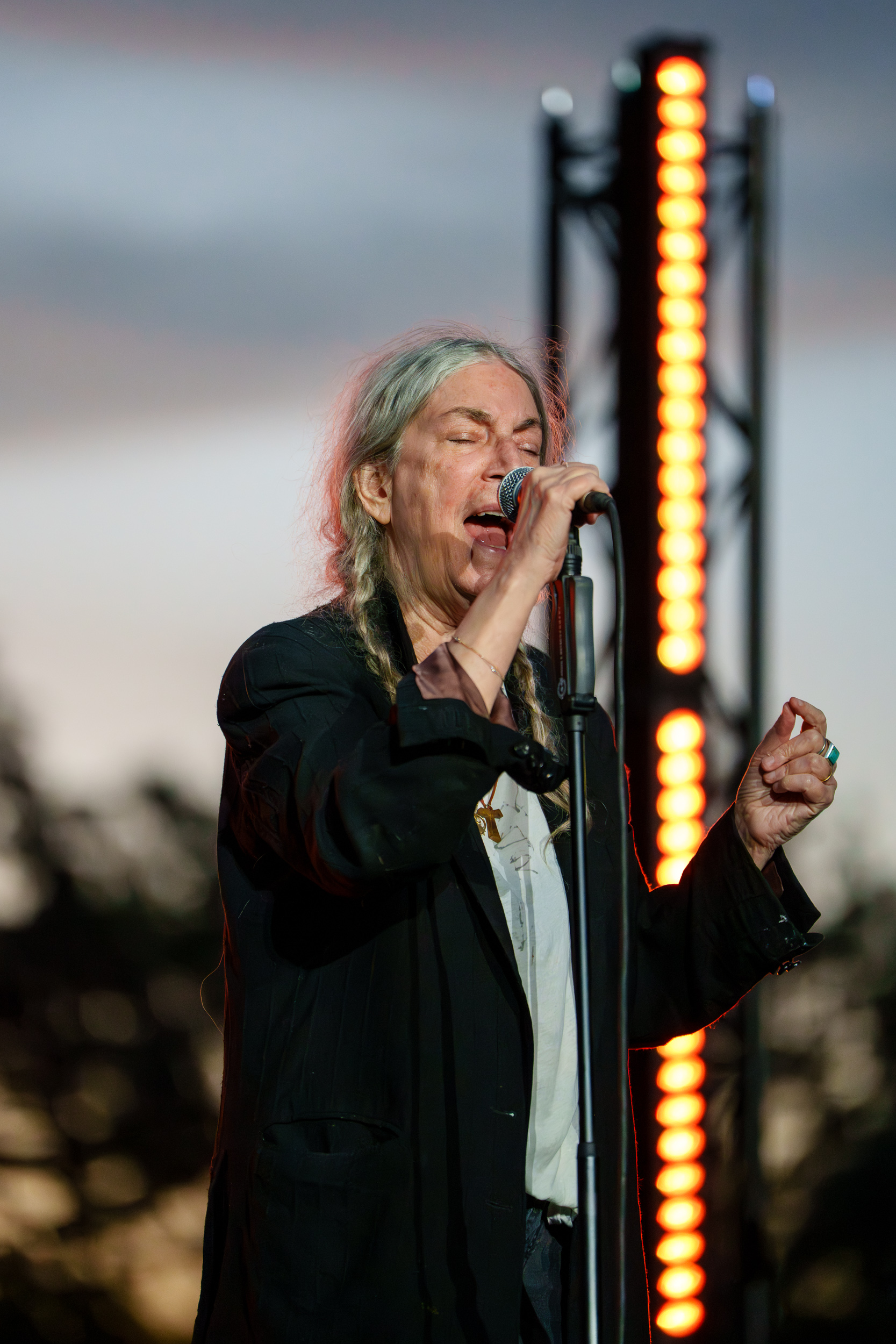
“Dancing Barefoot” opened the night, immediately setting the balance that would define the performance: direct and raw when it needed to be, but also intimate and reflective. Smith’s voice carried the character of the songs without trying to recreate the past exactly as it once sounded. Instead, the music felt alive in the present, shaped by a performer who continues to approach familiar material as something that can still evolve on stage.
“Ghost Dance” followed, bringing a more communal feeling to the theater before “Space Monkey” and “Revenge” shifted the mood again. One of the strengths of the evening was the way the quartet could move between different periods and different sides of Smith’s catalogue without making the set feel like a simple collection of career highlights.
That became particularly clear during a section dedicated to Jim Morrison. A haunting interpretation of The Doors’ “The Crystal Ship” led into “Break It Up”, the song Smith wrote with Tom Verlaine in the 1970s after a dream involving Morrison. The two songs created one of the most atmospheric passages of the concert, connecting Smith’s own history with some of the artists and writers who have remained part of her creative world.
The performance gradually became more intense. “Fireflies” unfolded with a theatrical quality that allowed Smith to lean fully into the words, while “Pissing in a River” provided one of the evening’s rawest moments. The latter has always depended heavily on emotional delivery, and at Lycabettus it retained that sense of urgency, building from restraint into something far more visceral.
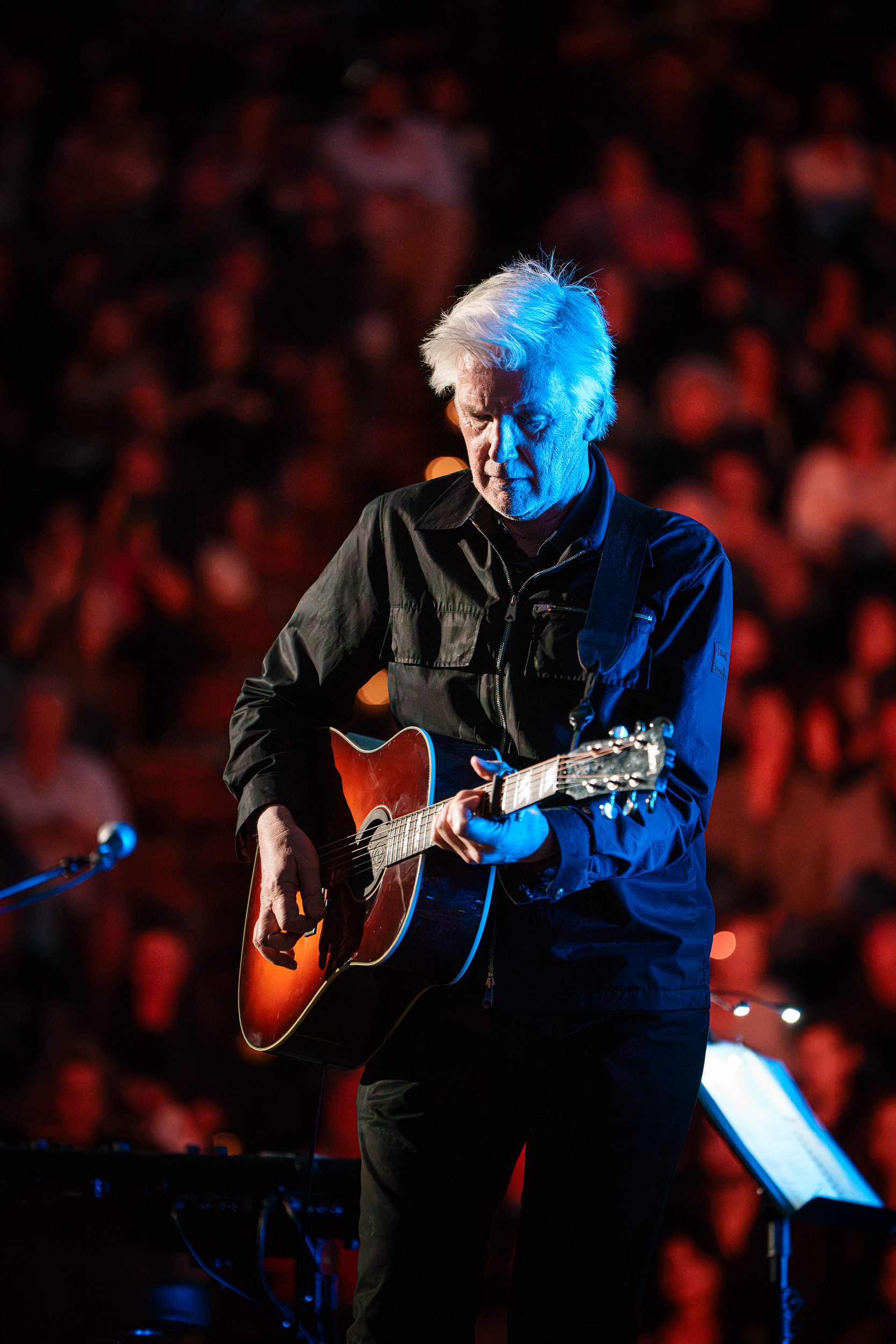
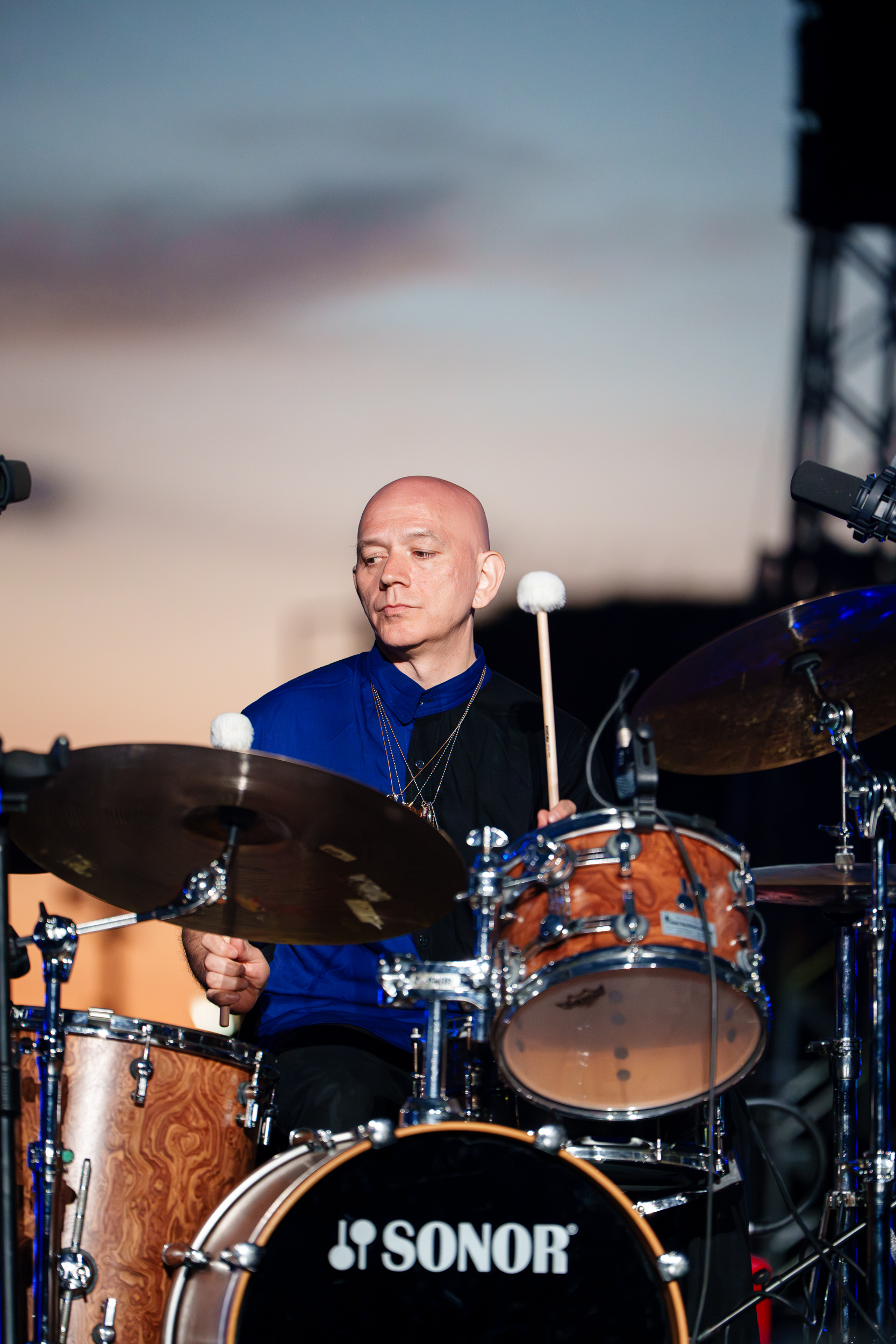
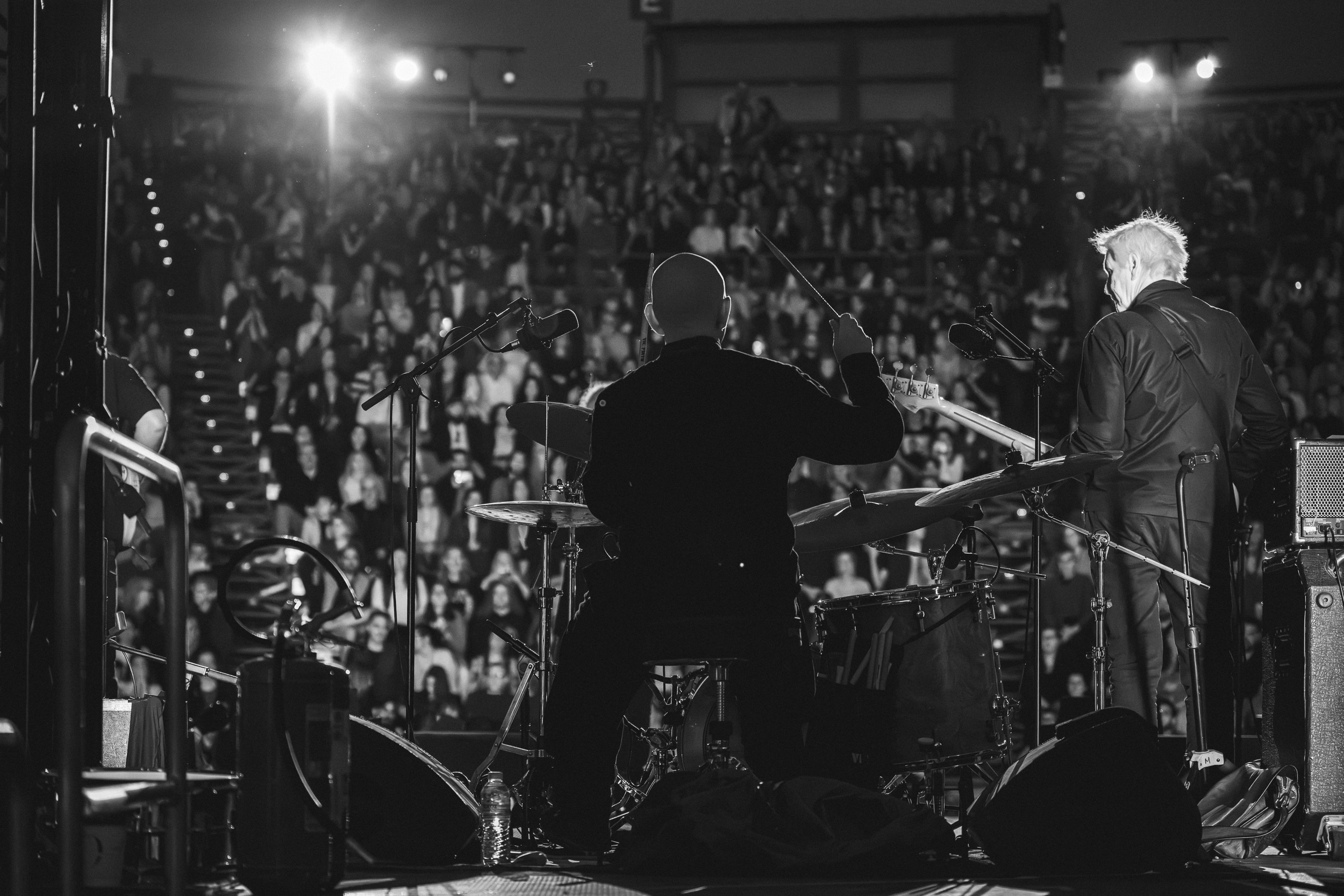
Throughout the concert, the quartet proved essential to the way the material was presented. Rather than surrounding Smith with unnecessary layers, the arrangements left space for the songs to breathe. The musicians could remain understated when the words demanded attention and then expand quickly when the music called for greater force.
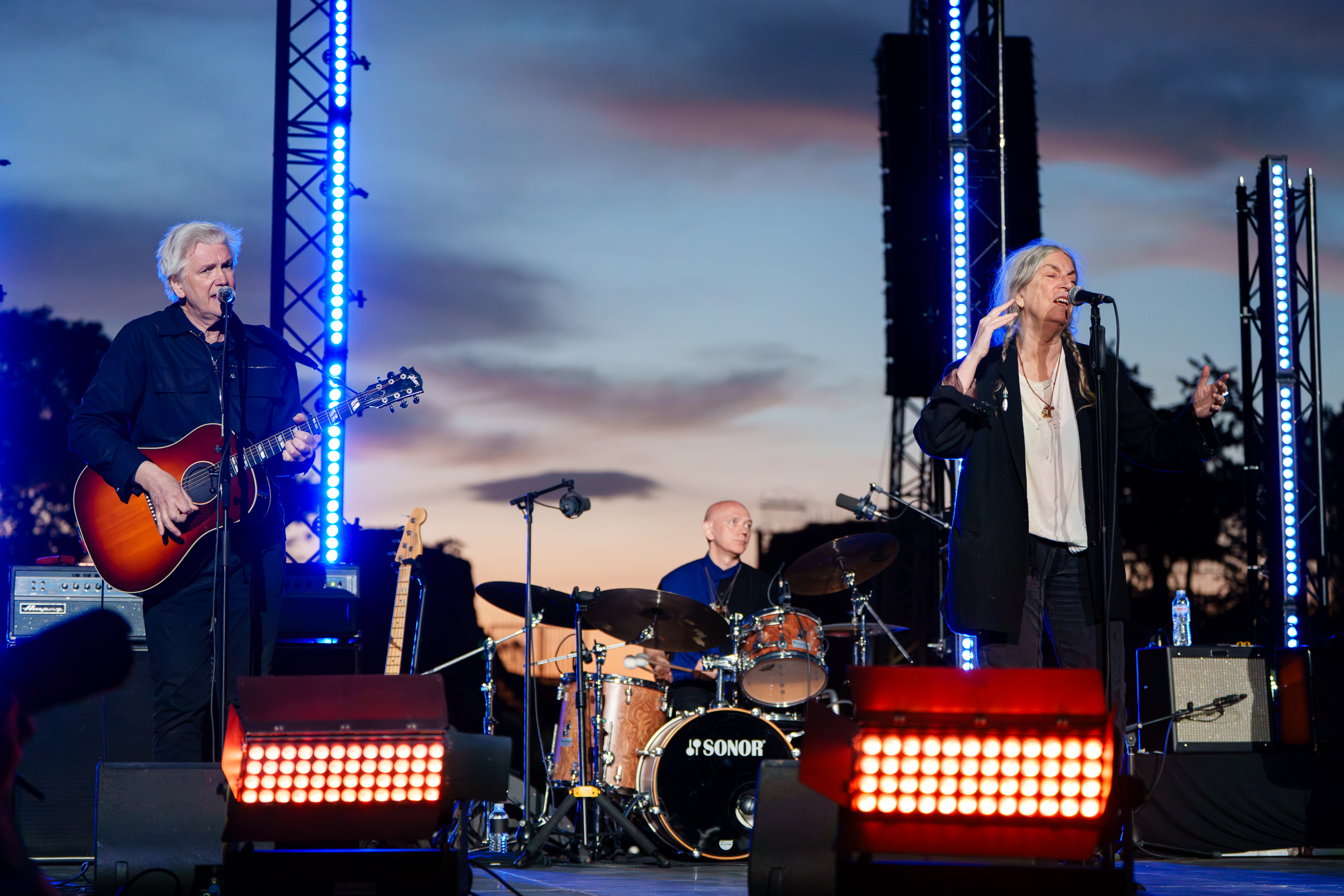
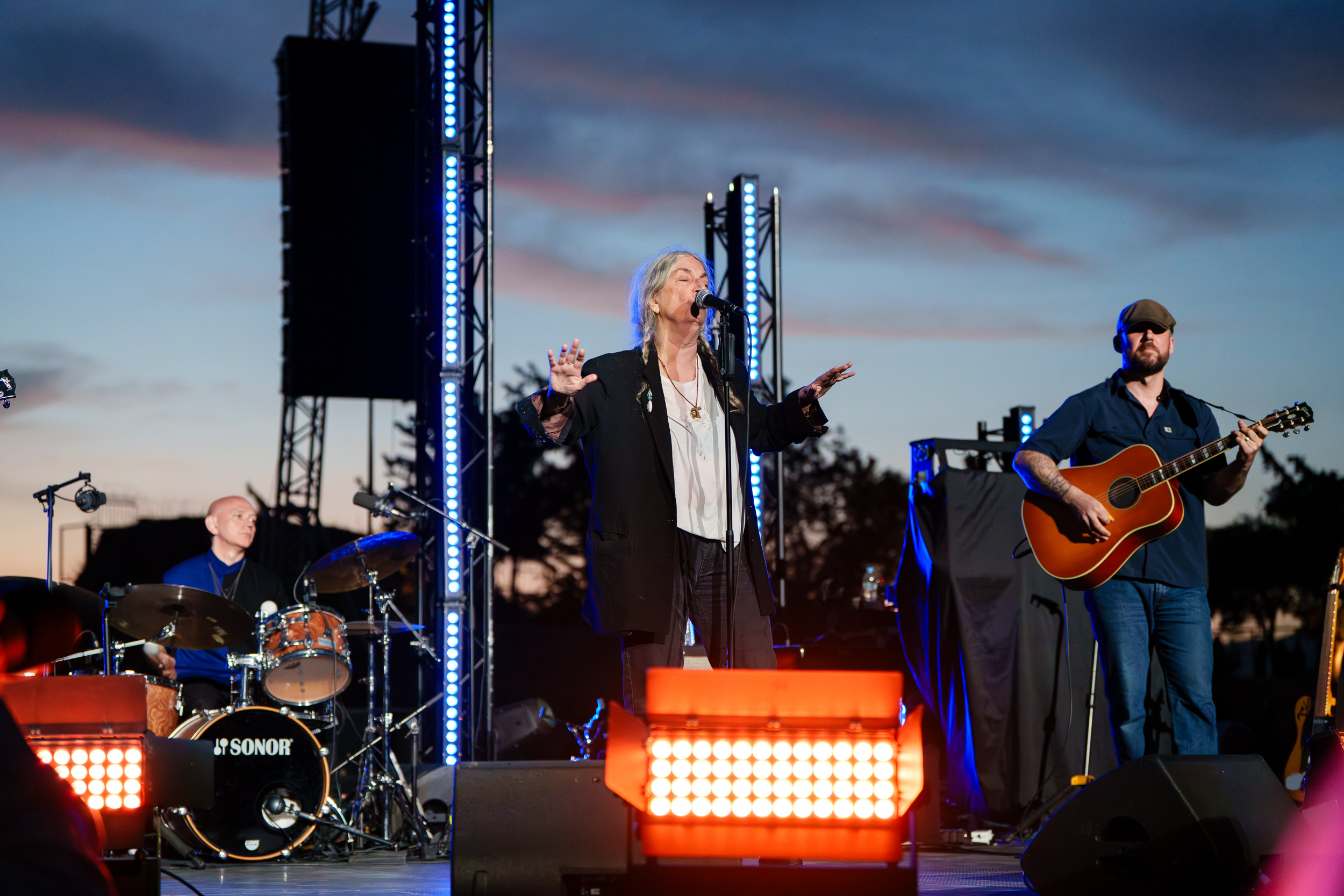
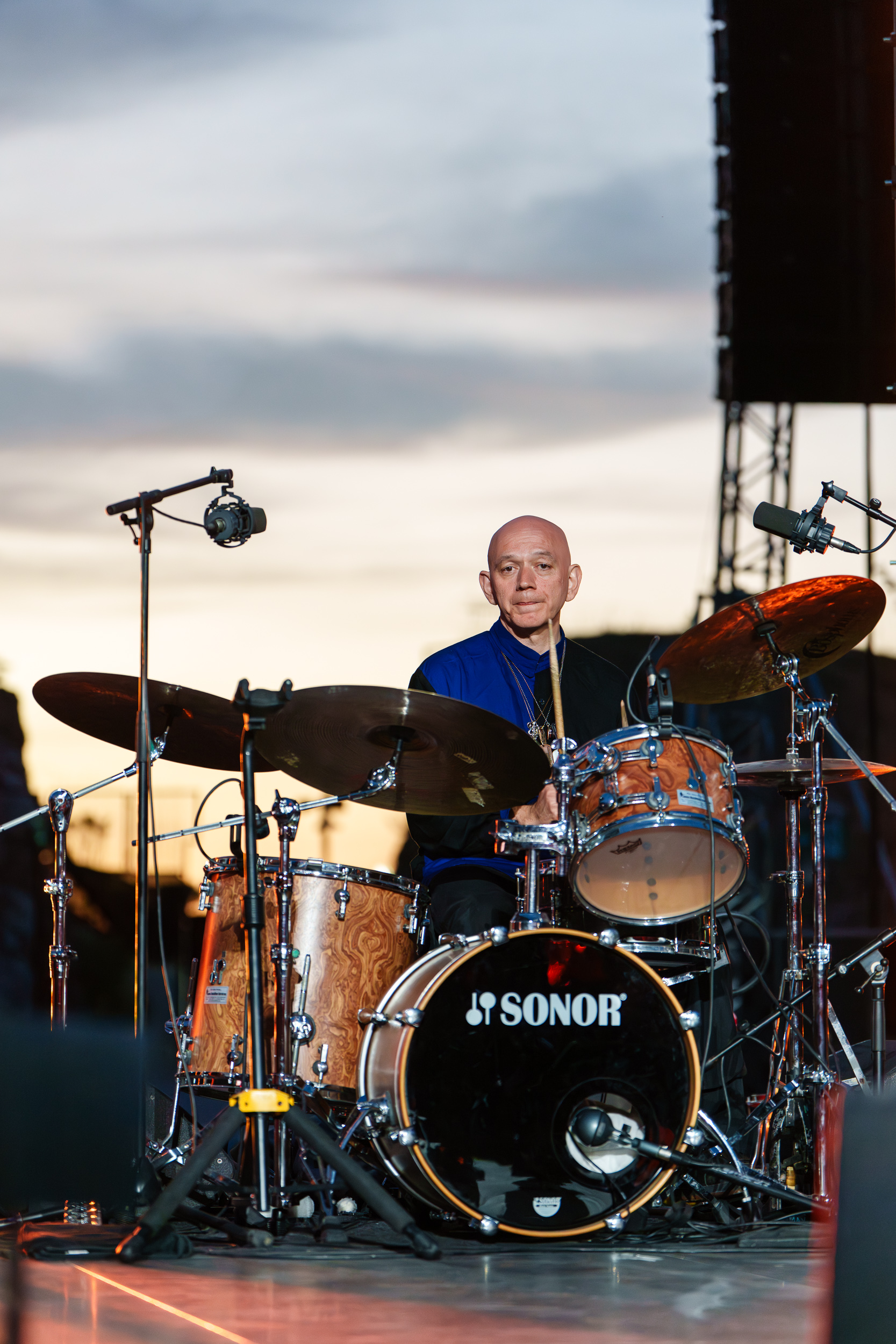
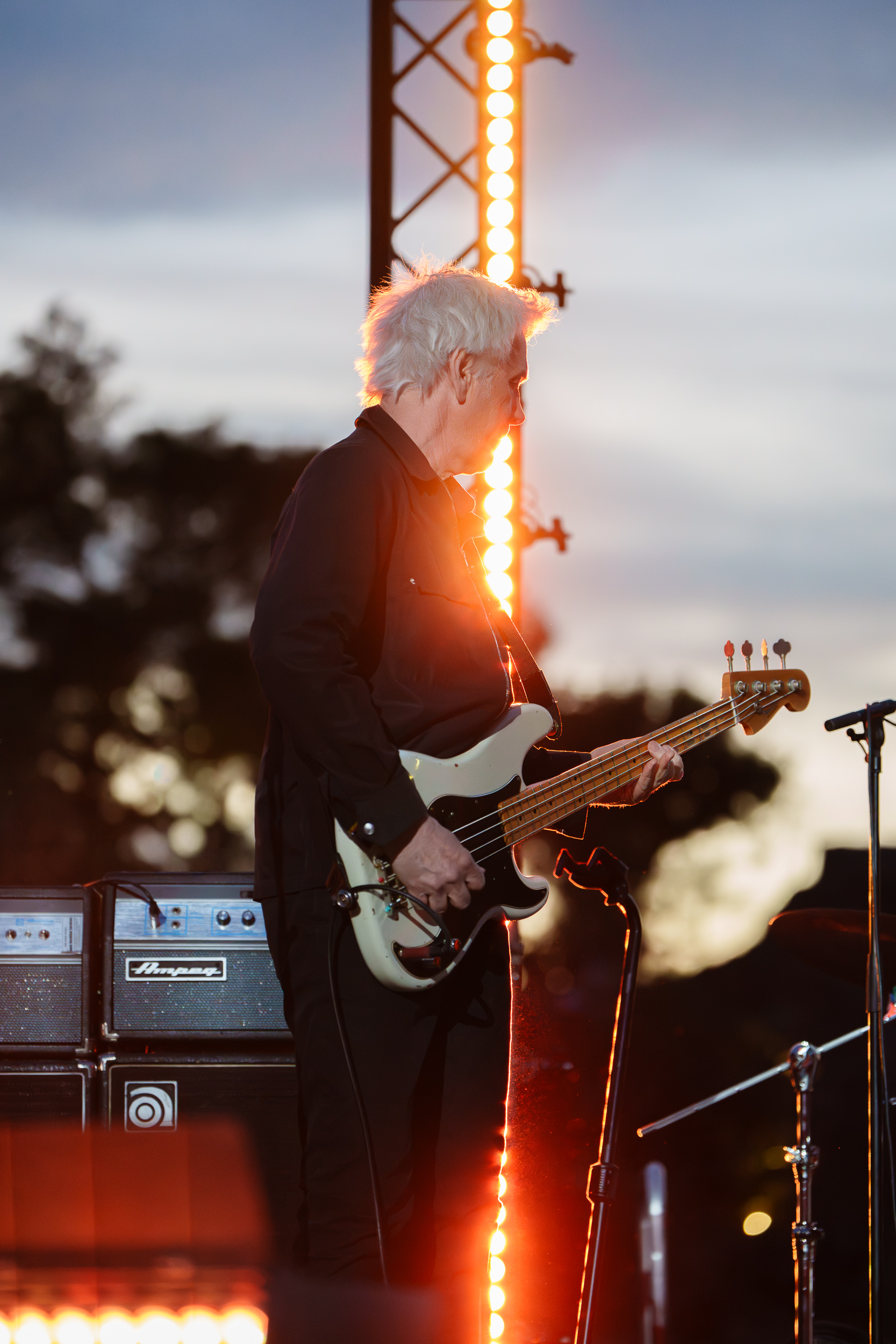
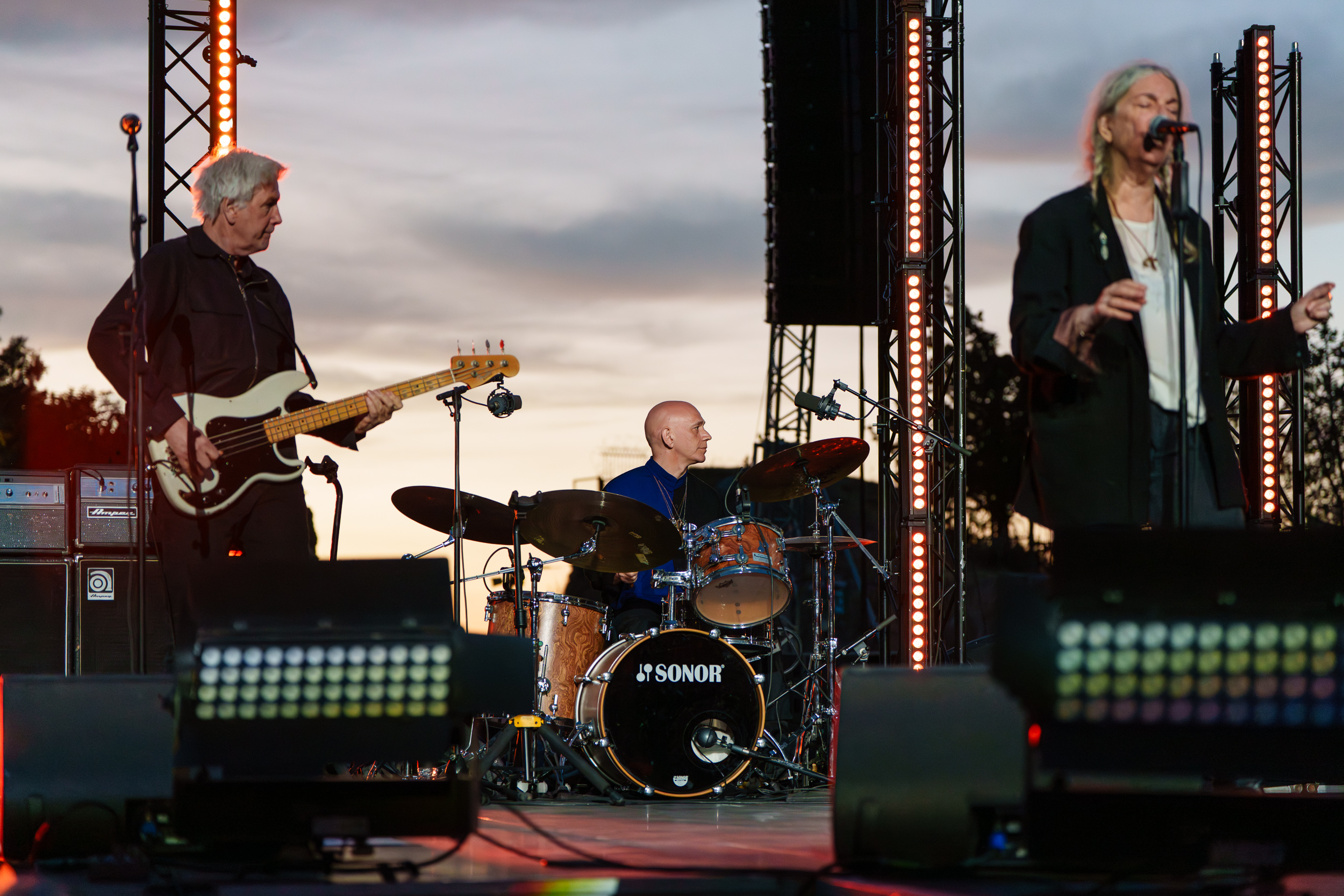
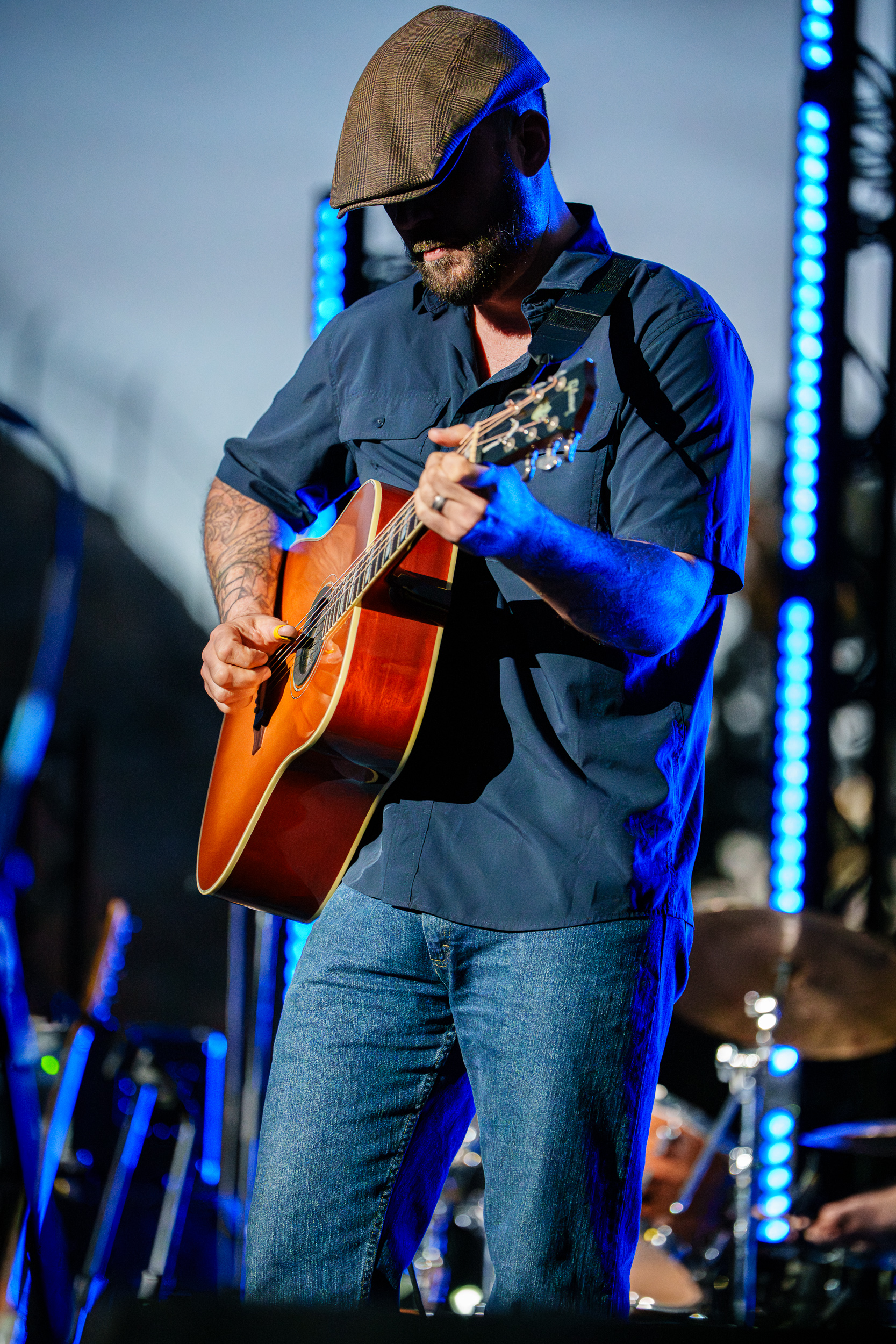
With Jackson Smith on guitar, Tony Shanahan on bass and Seb Rochford on drums, the quartet gave Smith the space to move between intimate passages and moments of full rock intensity.
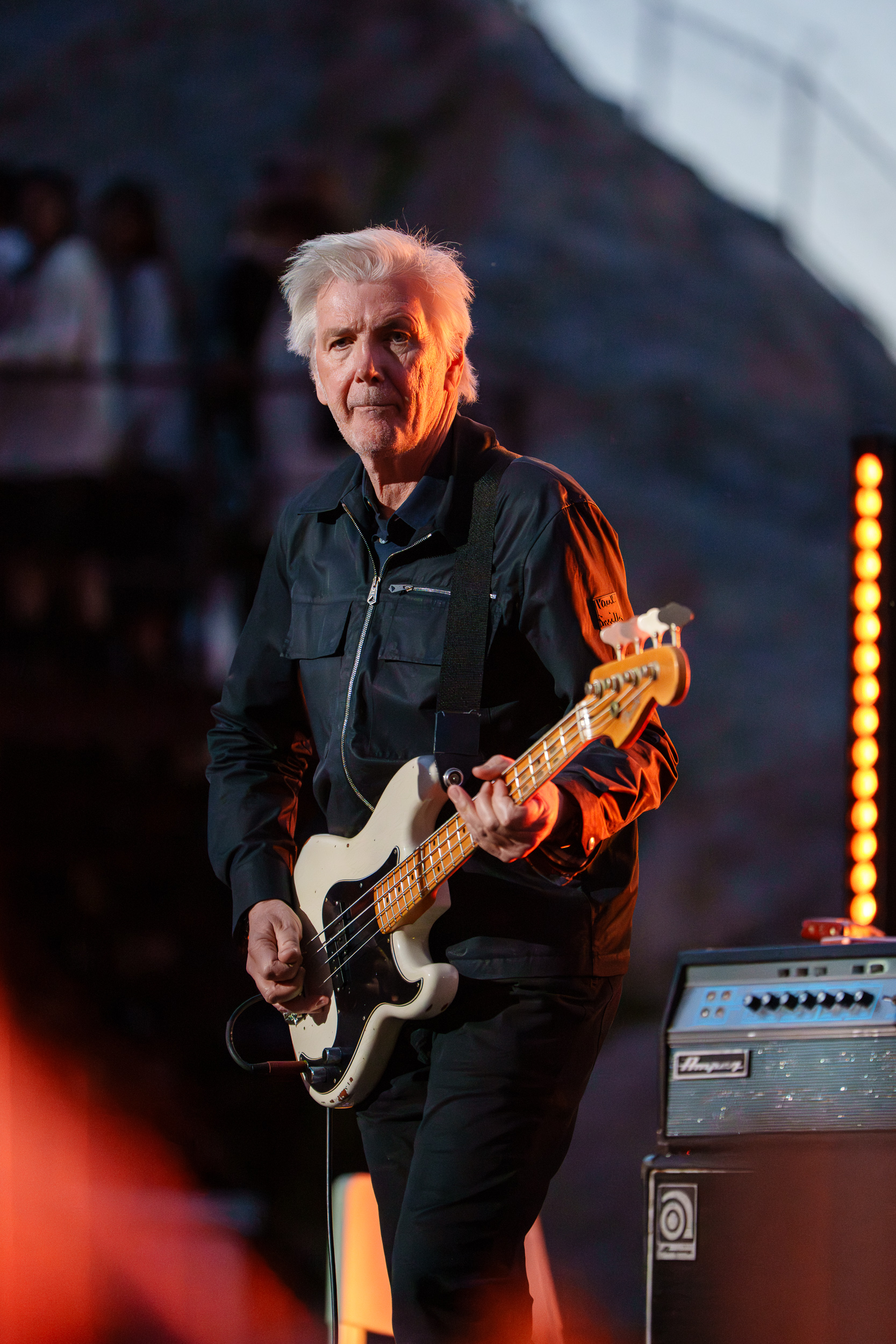
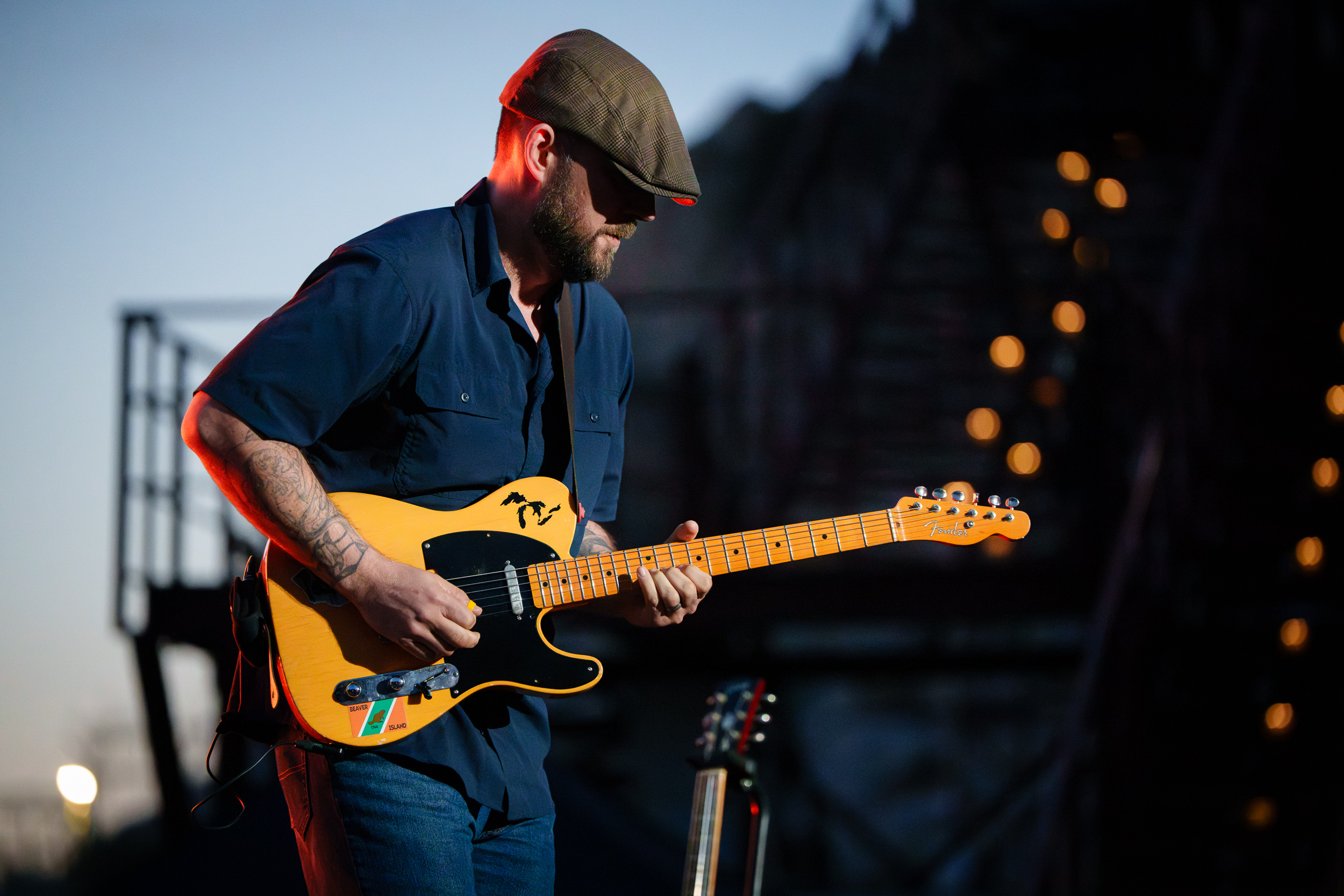
Smith briefly stepped away from the stage later in the set, leaving the band to take over for George Harrison’s “Isn’t It a Pity”, with Tony Shanahan handling the vocals. It offered a different texture in the middle of the performance before Smith returned for “Beneath the Southern Cross”, bringing the focus back to her unmistakable mixture of spoken expression, melody and rock dynamics.
The concert was never disconnected from the present. That has always been central to Patti Smith’s work: songs from decades ago are rarely presented only as pieces of musical history. At Lycabettus, ideas of resistance, solidarity and collective responsibility remained part of the performance, not as additions placed between songs but as elements naturally connected to them.
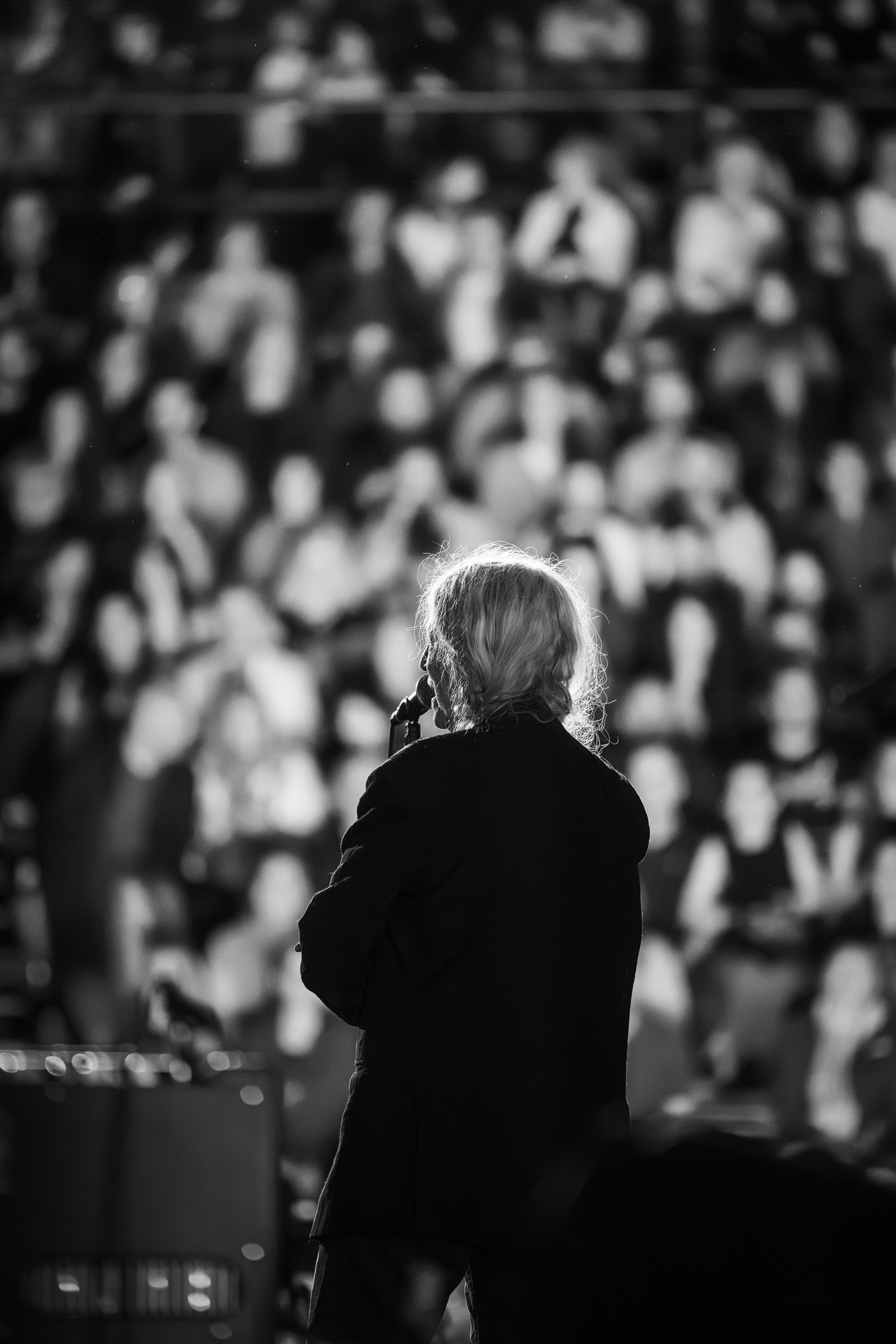
That connection became especially clear around “Peaceable Kingdom”. The song moved into lines from “People Have the Power”, giving its message a renewed sense of urgency before the final section of the show began to take shape. The response from the audience reflected how easily Smith can turn a performance from something observed into something shared.
Then came “Because the Night”. Before the song, Smith spoke about Fred “Sonic” Smith, her late husband and the father of her children. The familiar opening immediately changed the atmosphere inside the theater, and the audience joined in almost instinctively. It may be the most widely recognised song associated with her career, but in this setting it never felt like an obligatory hit placed near the end of the set. It carried personal history with it.
“Gloria” pushed the energy higher still. Smith’s transformation of the Them song has been part of her identity since the opening of “Horses” more than fifty years ago, and its combination of poetry, confrontation and rock ’n’ roll remains an ideal expression of what makes her performances unique. By this point, the distance between stage and audience had largely disappeared, with the theater responding to every shift in intensity.
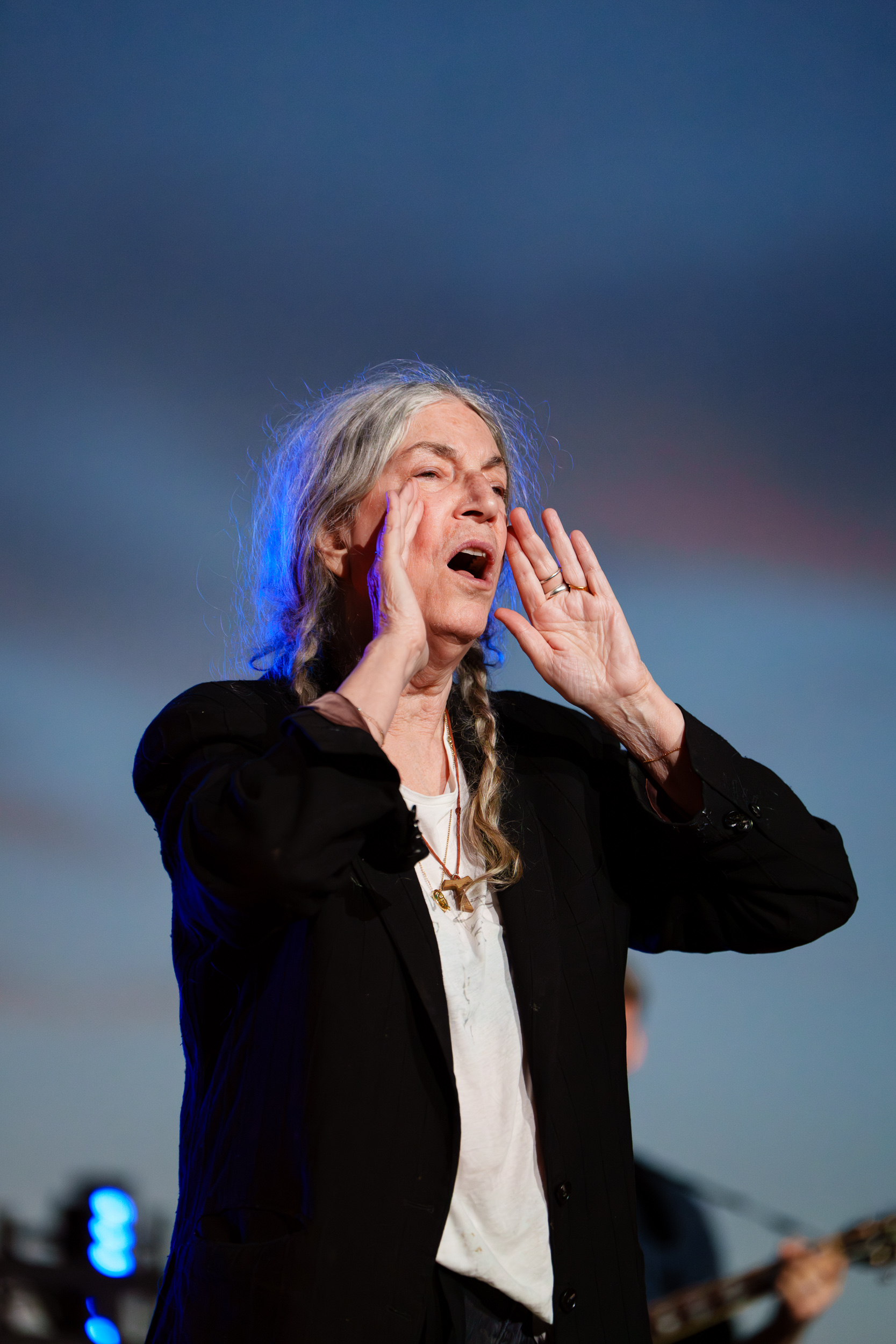
After the main set ended, there was little doubt that the evening still had one final statement to make.
Smith returned for “People Have the Power”. The audience moved closer to the stage as the song developed, turning the closing minutes into a collective moment rather than a conventional encore. Its message has accompanied Smith for decades, yet hearing thousands of people repeat it together under the night sky of Athens gave the song a renewed immediacy.
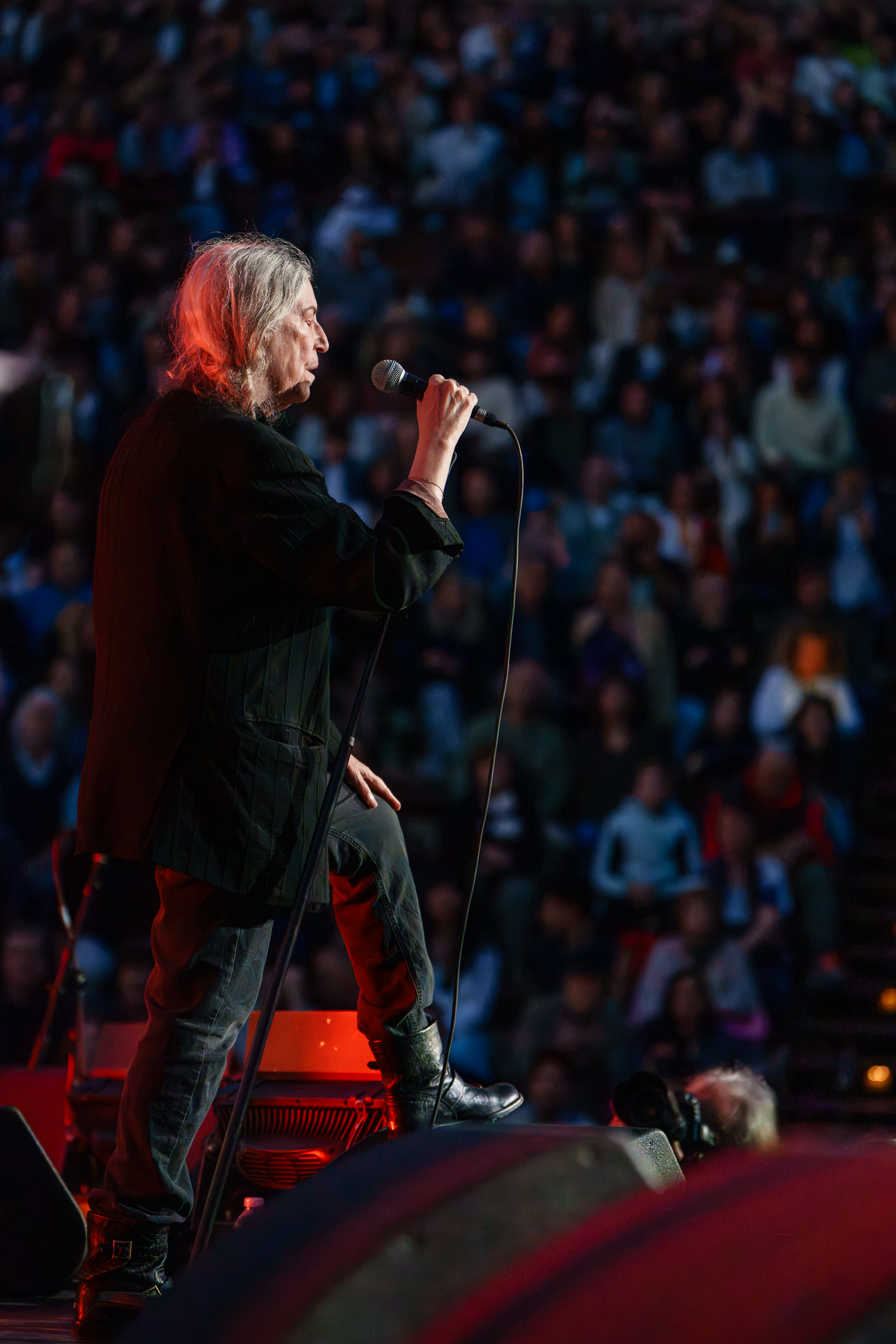
What stood out throughout the evening was not simply that Patti Smith can still perform these songs more than five decades into her career. Longevity alone is not particularly interesting. What matters is that she continues to find a reason to sing them.
There was no attempt to preserve the music behind glass or present the evening as a celebration of a completed legacy. The songs were allowed to remain imperfect, emotional, political, personal and alive. That distinction is what separates a performance built around nostalgia from one that still feels relevant.
The sold-out crowd at Lycabettus represented several generations, but the concert never felt divided between those who had lived through Smith’s early career and those who encountered her music much later. For roughly ninety minutes, those timelines seemed to disappear.
Patti Smith did not return to Athens simply to revisit the past. With her quartet beside her, she showed once again that the poetry, urgency and defiance at the heart of her work still belong very much to the present.
Setlist
Patti Smith Quartet delivered a set that moved across different eras of Smith’s catalogue, alongside carefully chosen covers and an encore built around one of her most enduring anthems.
- Dancing Barefoot
- Ghost Dance
- Space Monkey
- Revenge
- The Crystal Ship (The Doors cover)
- Break It Up
- Fireflies
- Pissing in a River
- Isn’t It a Pity (George Harrison cover; Patti off stage, Tony Shanahan on vocals)
- Beneath the Southern Cross
- Peaceable Kingdom / People Have the Power
- Because the Night
- Gloria (Them cover)
Encore:
- People Have the Power
Band Lineup
Patti Smith – Vocals
Instagram: @thisispattismith
Jackson Smith – Guitar
Tony Shanahan – Bass, guitar
Instagram: @tony.shanahan.33
Seb Rochford – Drums
Instagram: @sebrochford